

Our Services
Practical help at every stage of AI Adoption
Whether your team is learning the fundamentals, testing a use case or redesigning a workflow, we help you move from curiosity to working capability at a pace your organisation can support

Image generated with AI (ChatGPT).Why we do this work
The nature of work is changing.
Most organisations need more than another AI presentation.
Access to AI is no longer the main barrier.
The real challenge is turning access into useful, responsible and repeatable practice.
People need to understand how AI applies to their roles. Teams need clear guardrails. Leaders need to know which opportunities are worth pursuing. Processes often need to be redesigned before any technology is added.
And every build needs an owner, a review model and a way to tell whether it helped.
25 Hours AI brings those pieces together.
We train people, test ideas, build focused agents, redesign workflows and create practical implementation plans.
The technology matters, but it comes after the work and the people who understand it.
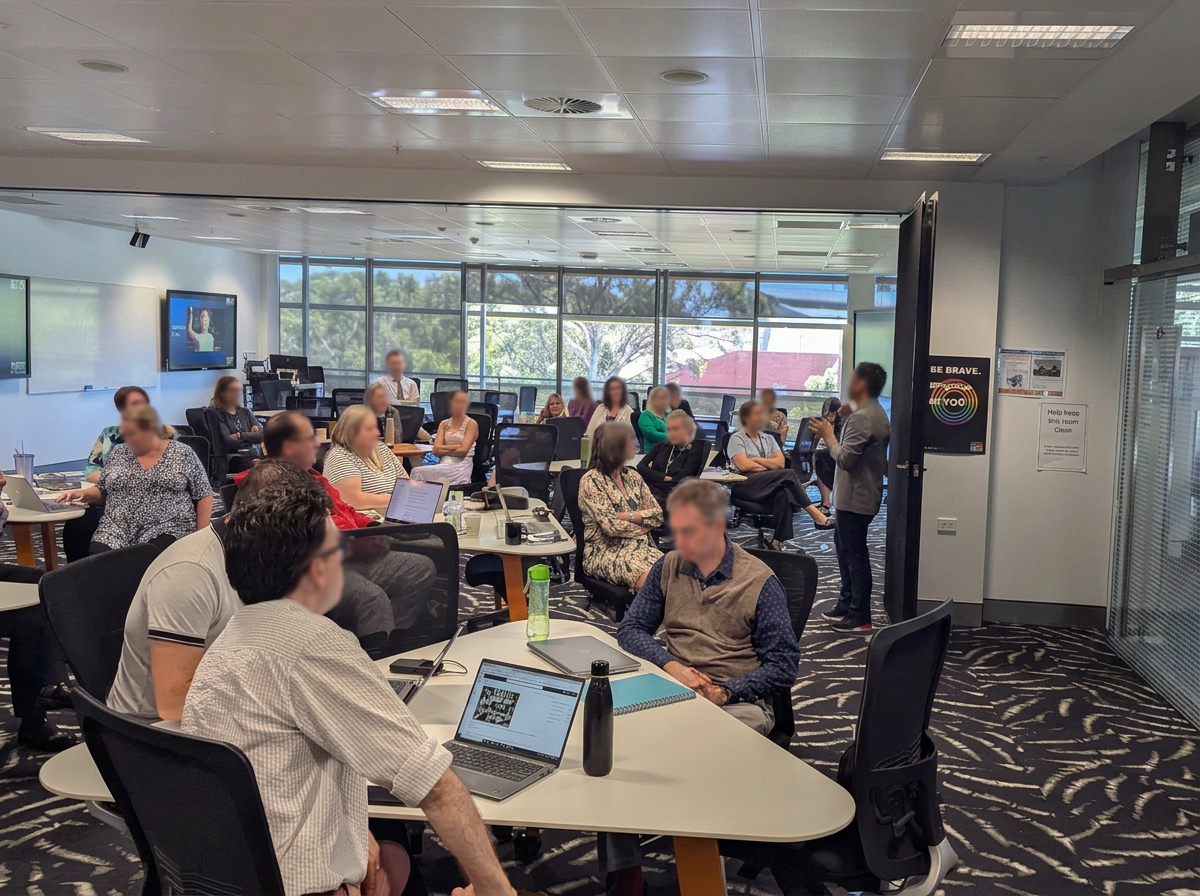
This image is real, from our University Research Training workshopsOur service model
Learn. Apply. Build. Integrate.
Our Crawl, Walk, Run model helps explain the journey, but it is not a rigid package. We meet organisations where they are and recommend the smallest useful next step.
Crawl
Build literacy, confidence and safe practices.

Walk
Apply AI to defined tasks and create repeatable team capability.

Run
Integrate AI into workflows, operating models and continuous improvement.

All illustrations above were generated with AI (ChatGPT)
Tailored AI Training
Training built around your people and their work.
Generic training can create awareness.
Tailored training changes what people can do when they return to work.
We design practical sessions around your industry, departments, tools, roles and workflows. We keep the language clear, the demonstrations relevant and the learning grounded in tasks your team recognises.
Training can include
Generative AI fundamentals in plain language.
Role- and function-specific use cases.
Executive and board briefings.
Safe and responsible AI use.
Prompting, evaluation and human review.
Using tools like: Microsoft Copilot, ChatGPT, Claude, NotebookLM, Perplexity and other approved tools.
Building simple personal or team assistants.
Workflow opportunity mapping.
Designed for
Organisation-wide awareness and literacy.
Leadership teams deciding how to move forward.
Departments that need examples relevant to their work.
Teams that have access to AI but are not yet using it consistently.
Organisations introducing new AI tools or policies.
What people leave with
A clearer understanding of what AI can and cannot do.
Practical ways to use approved tools in their roles.
Reusable prompts, methods, templates or simple assistants.
Clearer expectations around data, quality and human review.
A shortlist of useful next steps for the team
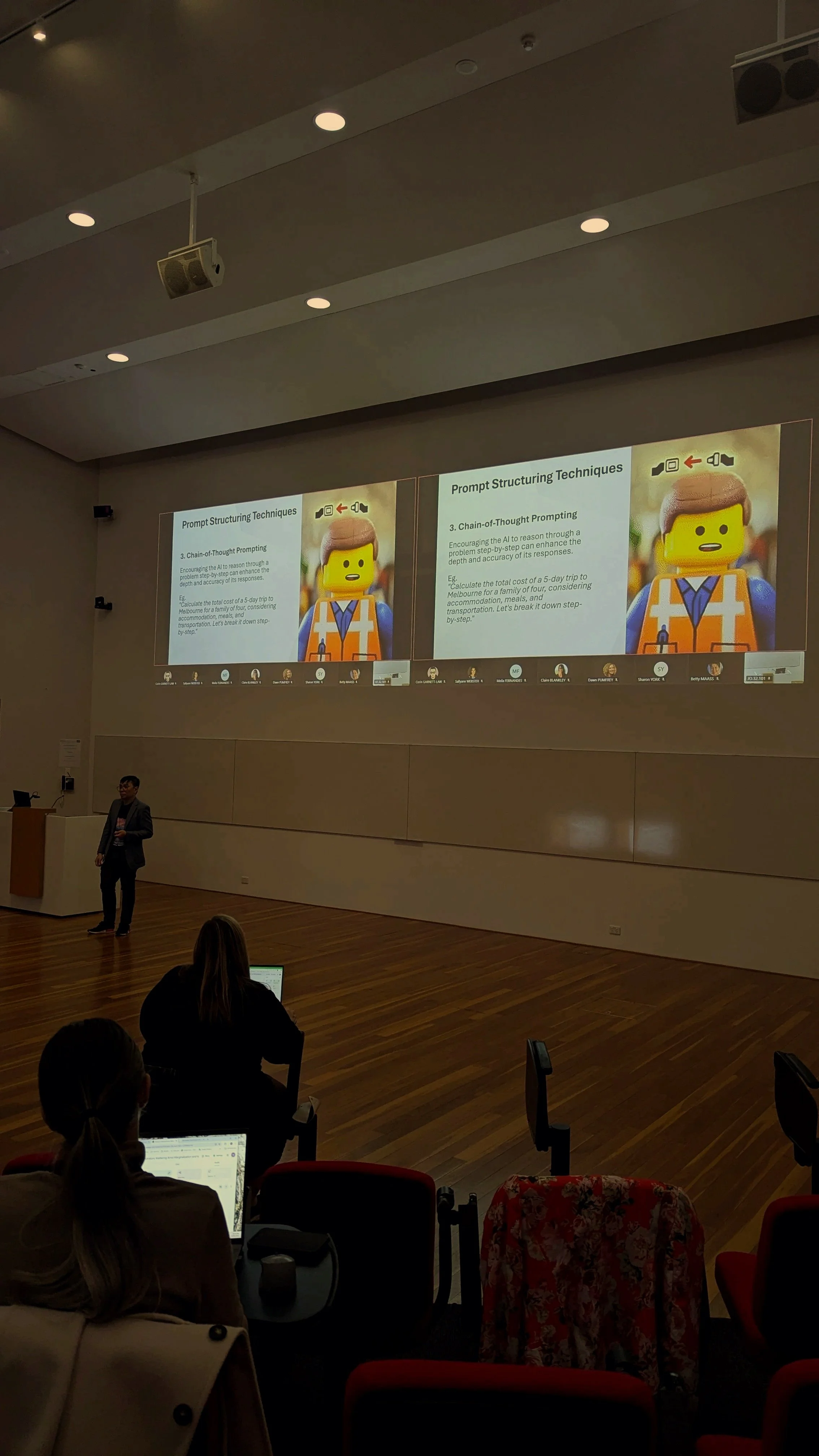
This is a real photo from one of our University Training Workshops
Applied AI
Turn a promising idea into something people can test and use.
Applied AI engagements are small, focused pieces of work designed to answer a practical question: is this use case useful, responsible and worth taking further?
We work with the people who understand the task, map the current approach and develop a prototype, test workflow or working example. The purpose is to learn quickly without pretending a demonstration is the same as a deployed solution.
Applied AI can include
AI opportunity and use-case workshops.
Task and workflow analysis.
Rapid prototypes using approved tools.
Prompt and knowledge design.
Small process experiments.
Evaluation criteria and test plans.
Risk, privacy and governance considerations.
Recommendations for implementation, improvement or stopping.
A good applied AI engagement produces
A working example rather than a strategy-only recommendation.
Evidence about usefulness, quality and practical limitations.
A clearer view of the data, process and governance required.
A decision about whether to adopt, improve, scale or leave the use case alone.

This image was generated with AI (ChatGPT)
Small Agent builds
Useful Agents for defined tasks.
Not every organisation needs a large platform or a complex autonomous system. Often, the most useful starting point is a focused assistant that helps a person or team complete a repeatable task.
We build small agents around approved information, clear instructions and defined boundaries. We also make the human role explicit: who directs the agent, who reviews the output and who remains accountable.
Examples
Research and literature assistants.
Policy and procedure finders.
Drafting and document-review assistants.
Enquiry triage and response-drafting tools.
Reporting and meeting-preparation assistants.
Team knowledge assistants.
Grant, submission or application support tools.
Role-specific Copilot agents, custom GPTs or equivalent assistants.
Every agent build considers
The task it should and should not perform.
The information it is allowed to use.
The expected output and definition of quality.
Human review, escalation and decision rights.
Privacy, security and records requirements.
Testing, ownership and ongoing maintenance

This image was generated with AI (ChatGPT)
Agentic workflow development
Redesign the work before automating it.
Many digital workflows are still manual processes wearing a software interface.
Forms become PDFs, emails become queues and people remain responsible for moving information between disconnected systems.
It’s 2020s, not the late 90s.
Agentic workflow development asks a better question: how should this work operate when people, information, rules, automation and AI can be designed together?
We map the current workflow, identify friction and redesign the process around the strengths of both people and machines. Agents may form part of the solution, but they are never the starting assumption.
The work can include
Workflow and service mapping.
Human-centred systems design workshops.
AI and automation opportunity mapping.
Process redesign and removal of unnecessary steps.
Agent and orchestration design.
Microsoft 365, Power Automate, SharePoint, Copilot Studio, Azure AI foundry, or related integration.
Human review, exception handling and escalation.
Pilot delivery, testing and iteration.
Adoption, ownership and performance measures.
The outcome
A practical workflow in which AI has a defined role, people remain responsible for judgment and the organisation can see what changed.

This image was generated with AI (ChatGPT)AI strategy and implementation plan
A strategy your organisation can actually implement.
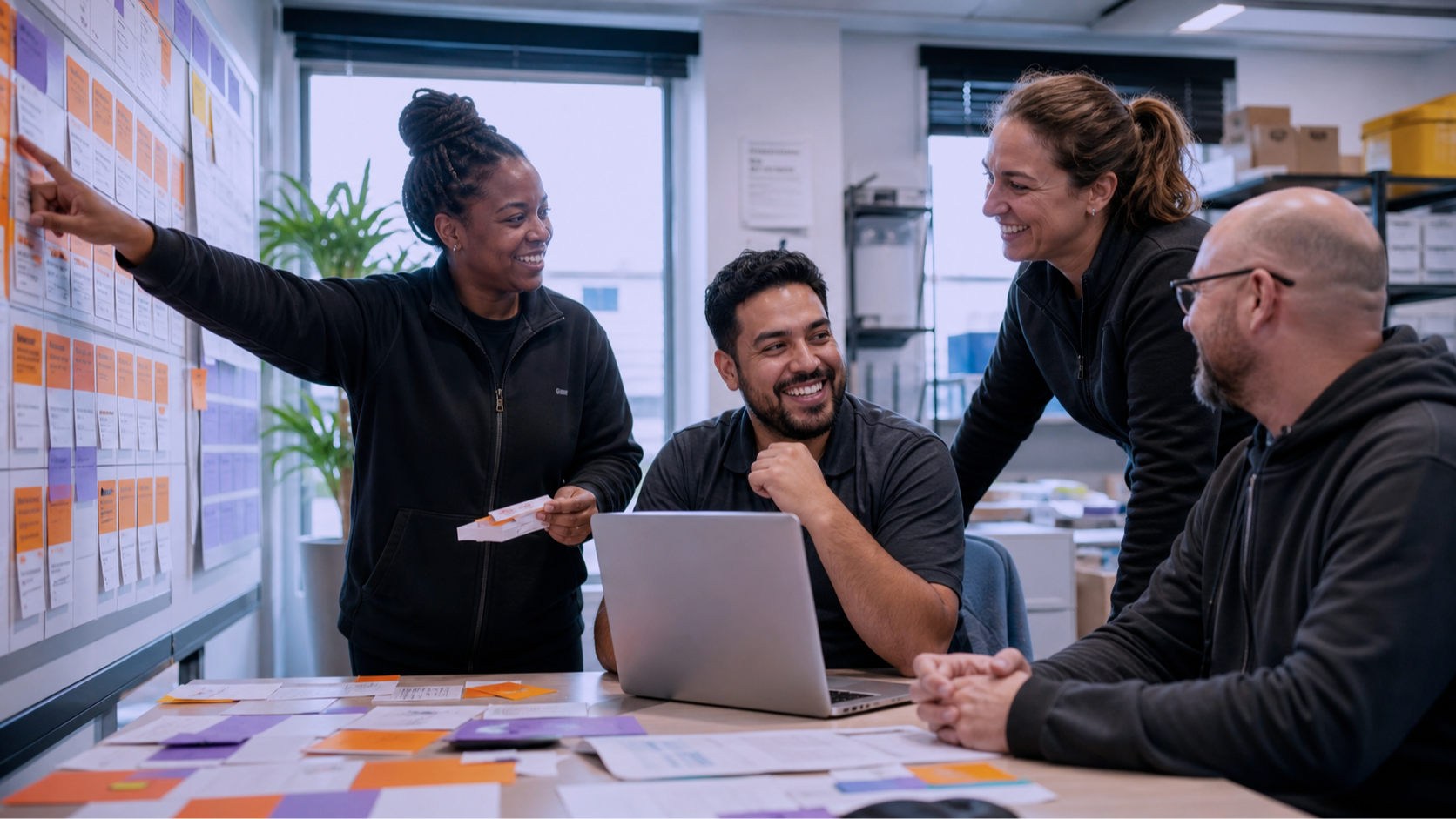
AI strategy should do more than describe ambition. It should help people decide what to do, what not to do, who owns the work and what needs to happen next.
We create practical strategies and implementation plans grounded in your organisation’s goals, operating environment, current capability and risk profile.
Strategy work can include
Current-state and AI-readiness assessment.
Leadership and stakeholder workshops.
Principles and priority outcomes.
Opportunity portfolio and use-case prioritisation.
Tool, data and capability considerations.
Governance, policy and decision rights.
Workforce capability and adoption planning.
Phased roadmap, dependencies and ownership.
Measures for value, quality, risk and learning.
What you receive
A clear, prioritised plan that connects strategic intent to decisions, owners and practical delivery.
No transformation theatre.
No list of tools pretending to be a strategy.
This image was generated with AI (ChatGPT)How an engagement begins
Start with one useful conversation.
You do not need a fully formed brief. Bring us the task that keeps creating friction, the opportunity your team is debating, the policy question slowing progress or the outcome leadership wants to improve.
We will help you frame the problem, identify the smallest useful next step and be honest if AI is not the best answer.